

Hypermobility (“Double-Jointed”) — What It Means & How We Can Help
Valerian Osteopathy – Rochester, Kent
Hypermobility—often described as being “double-jointed”—means your joints move further than average because the ligaments around them are naturally more flexible.
It’s very common: around 30% of people are hypermobile, and about 10% experience symptoms such as pain, fatigue or frequent sprains.
How is Hypermobility Diagnosed?
Clinicians usually assess hypermobility in two ways:
1. The Beighton Score
A simple scoring system that looks at how far certain joints can move. Each hypermobile joint scores one point.
2. The 2017 Hypermobility Spectrum Disorder (HSD) Criteria
This helps clinicians understand the type of hypermobility you have and whether symptoms like pain, frequent sprains, or instability are linked to it.
These criteria are only used once other conditions that cause joint laxity—such as Marfan’s or Down’s syndrome—have been ruled out.
Types of HSD:
• gHSD – Generalised hypermobility throughout the body
• pHSD – Hypermobility mainly in the hands and feet
• lHSD – One specific joint or area is hypermobile
• hHSD – You used to be more hypermobile, but have stiffened with age, injury or surgery
• Asymptomatic hypermobility – You’re hypermobile but don’t experience symptoms
Common Symptoms Linked With HSD
Your clinician will look for:
• Joint or muscle pain
• Recurrent sprains, strains or dislocations
• “Clumsiness” or reduced proprioception
• Flat feet or postural issues
• Curvatures or misalignment of the spine
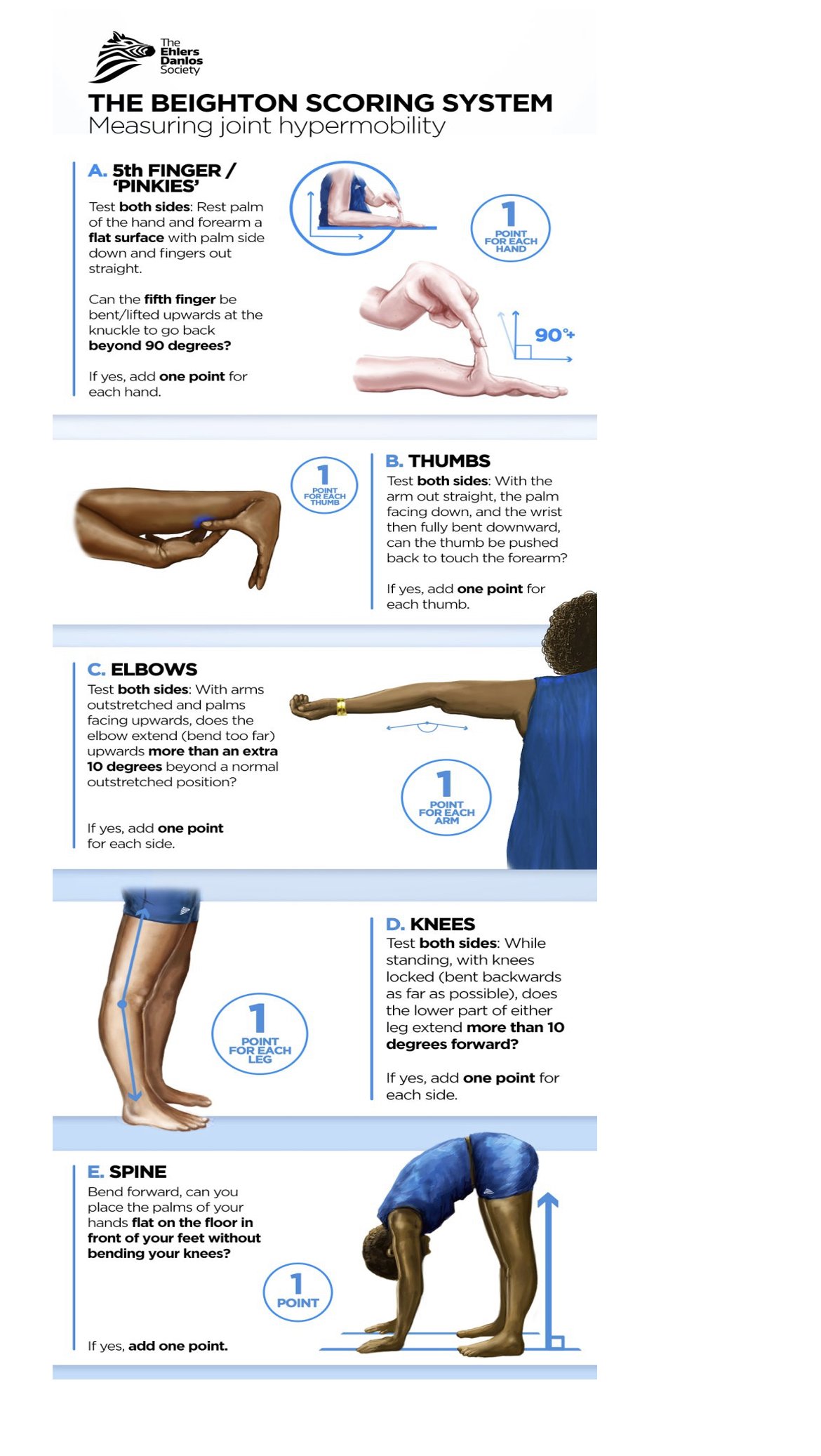
Hyper-mobility Syndrome - Beighton’s Scale
Other Conditions That Involve Hypermobility
While this article focuses on HSD and hypermobile Ehlers-Danlos Syndrome (hEDS), hypermobility can also appear in:
• Other types of Ehlers-Danlos syndromes
• Pseudoxanthoma elasticum
• Osteogenesis Imperfecta
• Marfan Syndrome
• Stickler Syndrome
(Your clinician will advise if further medical testing is appropriate.)
Living With Hypermobility
Regardless of the specific type of HSD or hEDS, most people benefit from a symptom-based, supportive treatment plan.
This often includes manual therapy, strength work, understanding your limits, and improving joint control.
How Osteopathy & Exercise Can Help
Manual Therapy
Osteopathy can help by:
• Releasing tight or overworked muscles
• Improving alignment
• Reducing pain
• Managing flare-ups gently and safely
Exercise – One of the Most Important Tools
Because hypermobile joints move more than usual, strengthening the muscles around them is essential.
Key guidelines we teach in clinic:
• Start with core strengthening – your spine and pelvis need a stable base
• Do some exercises seated to avoid overloading other joints
• Focus on controlled, slow movement
• Avoid pushing to your “end range”—stop just before your maximum stretch to protect your joints
• Keep contact/high-impact sports cautious or modified unless you’re working with a tailored plan
We can create a personalised rehabilitation plan for you based on your goals.
Link Below.
Hyper-mobility Strengthening Exercises
Hypermobility & Anxiety
Research shows a strong link between hypermobility and anxiety or panic symptoms.
This does not mean anxiety is “in your head”—it is believed to be connected to differences in your nervous system, pain sensitivity and proprioception.
If anxiety is part of your experience, it is important you get full support. We can help guide you to the right professionals.
When Should You Seek Extra Medical Advice?
Alongside hypermobility, further assessment may be needed if you also have:
• Extreme fatigue or slow healing
• Frequent dislocations or sprains
• Easy bruising, fragile skin or unusual scarring
• Heart palpitations
• Digestive issues such as reflux, constipation or hernias
• Overactive bladder symptoms
• A feeling that joints are “unstable”
Your osteopath can advise whether blood tests, cardiology assessment or referral to a specialist would be appropriate.
In Summary
Hypermobility is common, and for many people causes no major problems apart from the occasional sprained ankle or joint discomfort.
For others, it can lead to pain, fatigue, instability, and anxiety—but with the right support, your quality of life can improve dramatically.
If you think you may be hypermobile—or if you already know you are and want help managing symptoms—our clinicians at Valerian Osteopathy are here to support you with gentle treatment, tailored exercise, and clear guidance.

Hypermobility Syndrome (Double-Jointed)